

At the Springfield Science Museum, nearly 130 students gathered for the Springfield Cooler Communities Climate Fair—an inspiring day of learning, sharing, and connection across schools and grade levels.
While the museum itself was closed to the public, the whole space came alive with students becoming each other’s educators and audience.
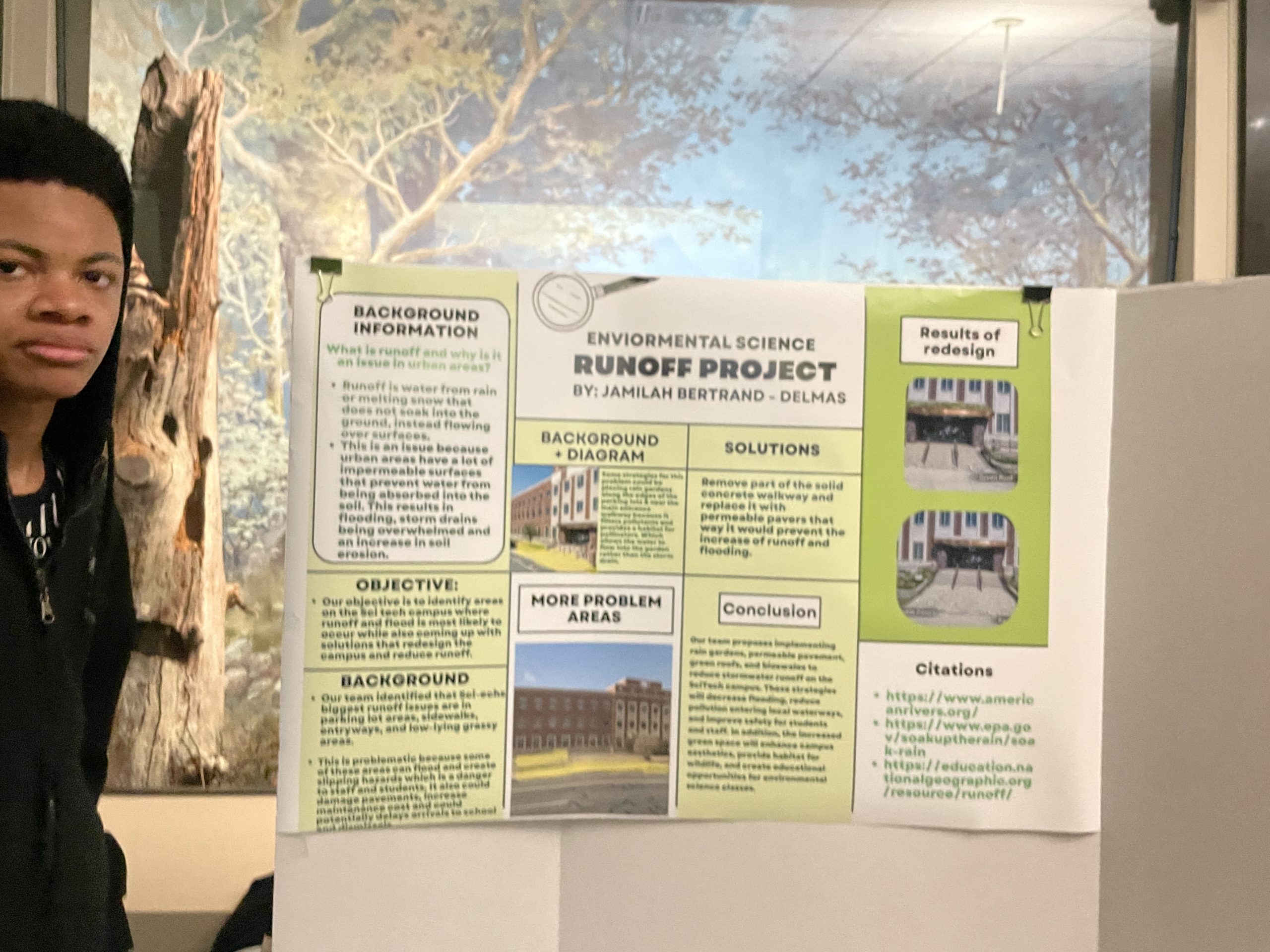
Eighty students from elementary to high school grades shared art in a vibrant climate art show. Alongside them, high school students presented carefully developed science and civics projects, ranging from the impact of composting to the benefits of solar energy and an ongoing advocacy campaign for their school district to hire a dedicated sustainability director.
One of the most memorable moments of the day was a structured student exchange—reminiscent of “speed dating”, led by Springfield’s Director for the Arts Gary Bernice. Students stood in two facing lines, each given about 30 seconds to explain their project or artwork to the person across from them. Then, one line shifted, and the process began again. With each rotation, confidence grew, explanations became sharper, and the community of students from across the district became more alive.
The event became not just a showcase of work, but a space for building community—where students could see how others their age are thinking about climate challenges and solutions.
We were especially excited and grateful that state senators Gomez and Oliveira took the time to join and address the students, and that the event was featured on two local television stations, helping to bring wider visibility to student-led climate learning.
Organized in collaboration with Cooler Communities, the Climate Fair is part of a state-wide program to connect classroom learning with real-world climate solutions and civic engagement. What stood out most throughout the day was a sense of optimism and ownership. Students were not only learning about climate challenges—they were actively communicating their ideas, engaging with one another, and stepping into their roles as informed and capable contributors to the future. The Springfield Climate Fair offered a powerful example of what climate education can be: student-driven, interactive, and deeply connected.
In the video below, Ron St. Amand, Director of Science for Springfield Public Schools, offers reflections on the impact of the Cooler Communities Climate Fairs on climate education in the district:


